
 Suomi
Suomi Svenska
 Dansk
Dansk Deutsch
 Polski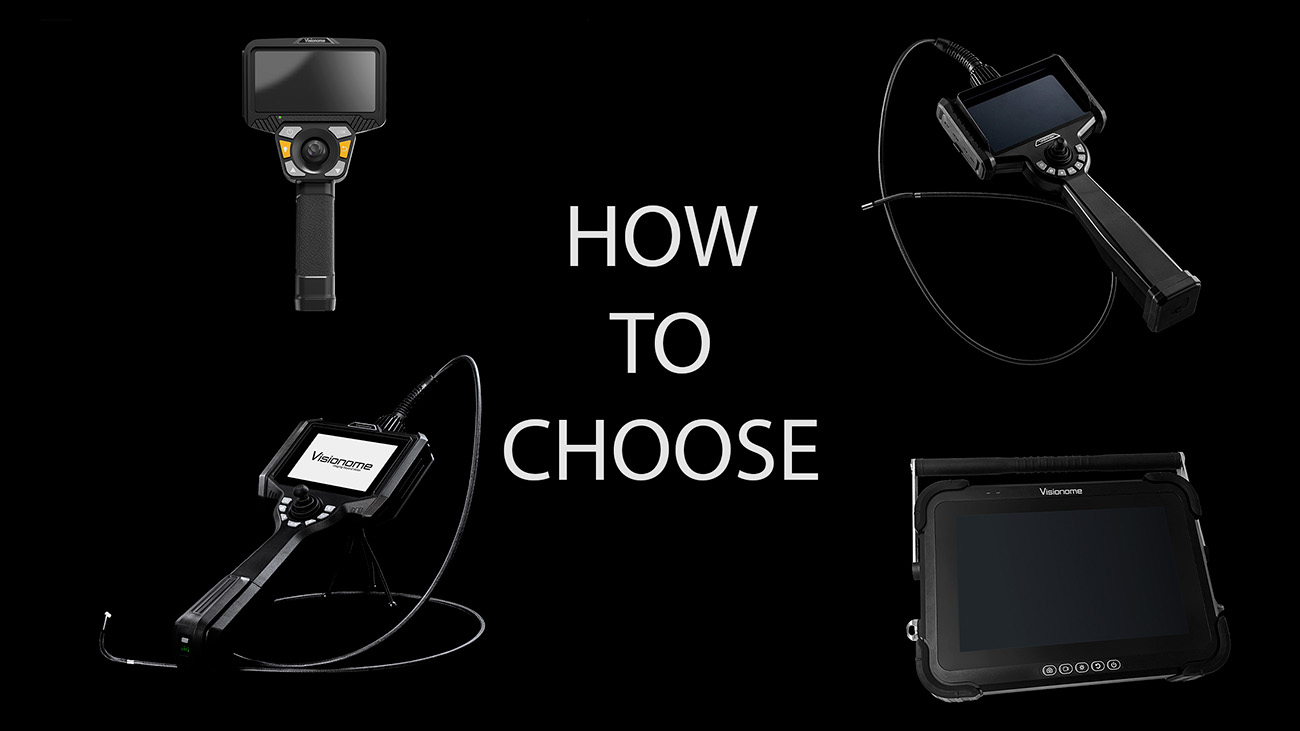
At first glance, purchasing an endoscope seems straightforward: all you need is a camera and a cable. However, it is not quite that simple.
The purpose of an endoscope is to help us see into difficult-to-reach places that are normally inaccessible. For this reason, when purchasing one, it makes sense to focus on what the cable is capable of. Is it thin enough? Is it long enough? Can it withstand the demands of the environment?
Once you’ve made sure the cable meets your needs, it’s worth turning your attention to other features, such as light output and image quality. Did you know that light is one of the most significant factors affecting image quality?
Cable
Remember that the cable needs to reach exactly where you want to see. This almost always requires a cable with a head that you can manoeuvre in the direction you want at the site. If the tip cannot be rotated, it is more than likely that the camera will not end up pointing in the right direction. A rotatable tip is therefore undoubtedly one of the most important features of an endoscope. If the lens cannot be directed to the desired location, no level of resolution or light output can compensate for this; the device is simply useless.
Visionome’s endoscopes are fitted with a manoeuvrable head – with the exception of the very thinnest cables. Once you have confirmed that the head is manoeuvrable, it is important to specify the cable length and the maximum outer diameter.
You should only choose the cable length that you actually need. It is not worth taking extra length just to be on the safe side, as a cable that is too long will simply get in the way and be a hindrance during use. There is also an increased risk of damage if excess cable is lying in the way. If the cable has to pass through bends, bear in mind that the cable always requires space to turn.
Light source
The light source is a critical factor: not only does it illuminate the object being examined, but it also directly affects image quality. Insufficient light output increases image noise, which in turn reduces its sharpness. Visionome’s range includes two types of light sources:
- Traditional LED (e.g. FlexDuty): Consists of several small LED elements positioned at the tip of the cable. This is the most cost-effective way to provide lighting, but it imposes limitations on maximum brightness, as each LED generates heat when switched on. In thin cables, the light output decreases in direct proportion to the number of LEDs, as there is less space for them.
- Optical fibre (FlexLumen, FlexLumen B, Zenora Split): LED lighting using optical fibre is significantly more efficient than traditional methods. In this design, a high-power LED is positioned at one end of the cable, from where the light is guided along the optical fibre to the tip of the lens. In this design, the heat generated by the LED is channelled into a separate heat sink, so the light can be considerably brighter without the tip of the cable heating up at all.
As the endoscope’s lenses are very small, very little light reaches the sensor. Therefore, the light output must be as efficient as possible.
Image resolution
Generally, image resolution is thought to be synonymous with megapixels: the more, the better. However, this is not entirely accurate, as the resolution of an endoscope consists of two factors: digital resolution (megapixels) and optical resolution (lens/optics).
- Digital resolution (resolution capability) simply indicates how much detail the sensor is capable of capturing from the subject. It determines how sharp an image the camera produces and how much the image can be enlarged or cropped without becoming blurred or pixelated.
- Optical resolution is at least as important a factor, as a high digital resolution does not automatically guarantee a sharp image. A camera’s sensor may be packed with megapixels, but if the device’s lens cannot focus light accurately, the pixels will only capture a blurry image. Lens grinding is a task requiring microscopic precision, so in cheaper devices, the optical resolution is unlikely to match the digital resolution.
It should also be noted that the sensors in endoscopes are considerably smaller in area compared to many other cameras, so it is not possible to add an unlimited number of pixels to them. Excessive pixel density also causes its own problems, usually in the form of increased noise.
Other features
Once you have identified the right cable and light source, it is time to look at the device’s other features and assess how they meet your needs:
- Do you need a reliable workhorse for long-term inspections, for example in industrial condition monitoring? FlexLumen is an excellent choice. It offers powerful fibre-optic illumination, a quick-change battery, a robust design and a 5-inch IPS display with adjustable brightness.
- Do you need UV or infrared light, for example in the electronics or food industries? FlexLumen B is the right tool for the job.
- Do you need a separate screen to keep your other hand free for working? Zenora Split offers unbeatable value for money in this category.
- Do you need the most affordable endoscope possible for occasional use? FlexDuty is a popular choice in car repair workshops and the construction industry, for example. You may not need the device every day, but thanks to its manoeuvrable head, it offers maximum benefit exactly when you need it.
Whichever model you choose, we’re confident that Visionome endoscopes will meet your inspection needs with flying colours – without you having to beg the management team for separate investment approval.