

 Suomi
Suomi Svenska
 Dansk
Dansk Deutsch
 Polski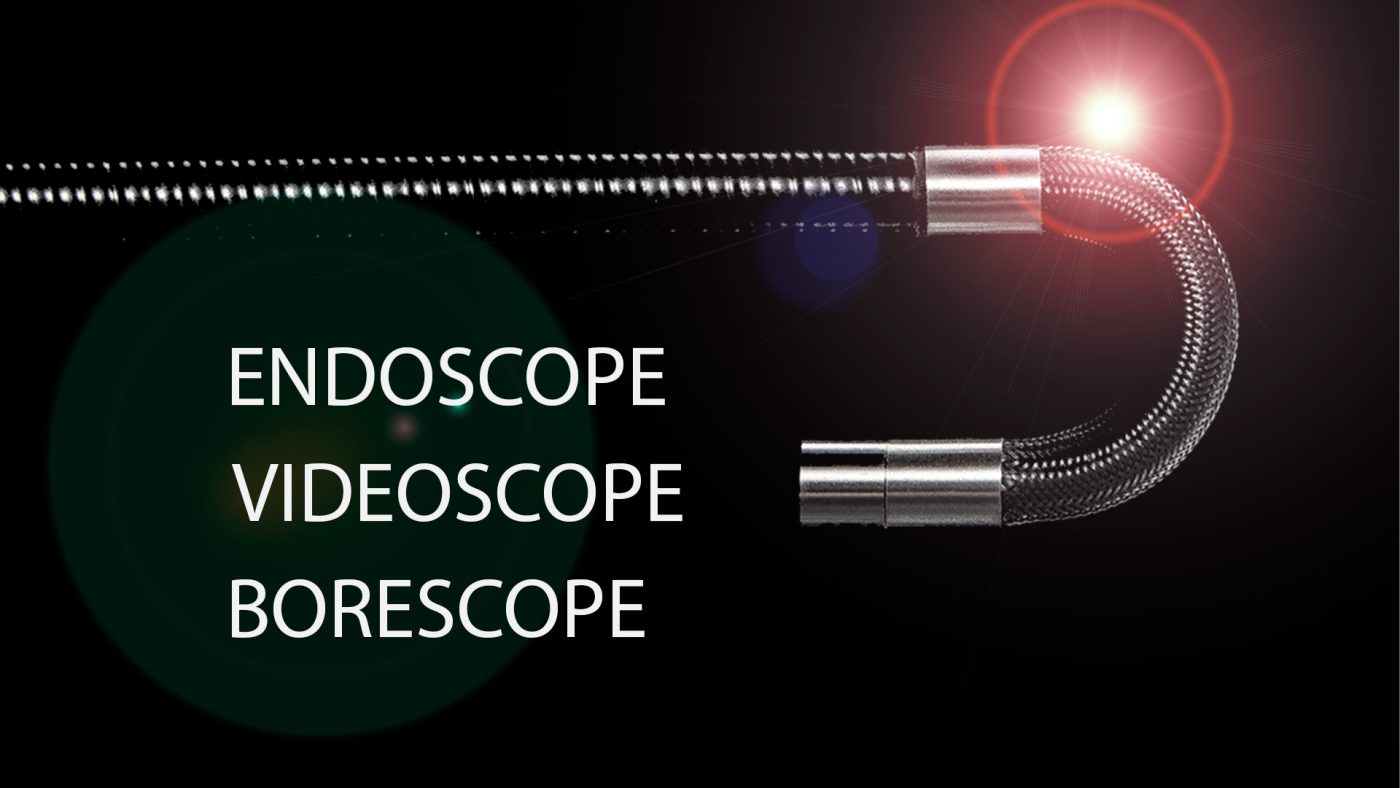
Endoscope or borescope?
Professionals in the field of NDT (Non-Destructive Testing) and visual inspection often face a linguistic question: why is there so much talk of endoscopes in the industry, even though technically the majority of inspection devices are borescopes, many of which are modern videoscopes?
This confusion over terminology is not merely a linguistic phenomenon; rather, it reflects developments in optical inspection technology, the convergence of device designs, and their established use across various sectors.
Borescope
The word ‘borescope’ is derived from the English word ‘bore’ (hole, drill hole or gun barrel) and the Greek verb ‘skopein’ (to look).
Origin: The first borescopes were developed in the late 19th century to meet the needs of industry and the arms industry, for example to inspect gun barrels, pipework, steam boilers and other hard-to-reach cavities without dismantling them or damaging the structures.
Basic structure: A traditional borescope is a rigid, tube-like device in which the image is transmitted via a lens system to the inspector or a camera. This design is particularly well suited to straight or nearly straight inspection sites and provides a highly accurate optical image.
Endoscope
The word ‘endoscope’ is derived from the Greek words ‘endon’ (inside) and ‘skopein’ ( to look).
Origin: The term and technology originate from medicine. In 1853, the French doctor Antoine Jean Desormeaux developed the first clinically usable endoscope for examining the urinary tract and established the term ‘endoscope’ for medical use.
Basic structure: As the structures of the human body are complex, convoluted and delicate, medicine gradually required increasingly flexible endoscopic instruments. This development first led to the use of fibre optics and later to digital camera sensors, which enabled the tip of the endoscope to be guided precisely into hard-to-reach areas.
Why did the industry adopt a medical term?
Although an industrial inspector works
in a mechanical environment, the term ‘industrial endoscope’ has become commonplace in many markets to refer also to modern video borescopes. There are several natural reasons for this phenomenon.
Technological convergence
As the scope of industrial inspections expanded from straight pipes to complex structures, such as jet engines, process pipework and internal channels in castings, rigid borescopes were no longer sufficient for all applications. Solutions familiar from medical endoscopes, such as flexible probes and tip-steerable designs, were adopted in industry. As the operating principles of the devices converged, the terminology also gradually began to merge.
Linguistic intuition and standardisation
In Finnish, the word ‘endoscope’ is readily understood as a generic term for an endoscopic device. As the term was already familiar from the field of medicine, its use naturally extended to industrial applications as well.
The digital age – videoscopes
Modern inspection devices are increasingly video scopes, in which the image is formed by a CMOS or CCD image sensor located at the tip of the device. Their design differs from that of traditional optical borescopes, in which the image was transmitted via lenses or fibre optics.
For this reason, the term ‘industrial endoscope ’ is often used as a general term for flexible industrial inspection devices, although in many cases the technically more accurate term is ‘video borescope’.
It is the application that matters, not the name
The coexistence of these terms is a natural consequence of technological development. When an industry expert is looking for an ‘industrial endoscope’, in practice they are usually referring to a modern flexible video borescope.
Regardless of the term used, what matters is the device’s technical characteristics – such as manoeuvrability, cable length, diameter, image quality and environmental resistance, are suitable for the object being inspected.
Visionome offers high-quality visual inspection solutions and expertise tailored to industrial needs. We help you find exactly the right inspection device, whether you call it an endoscope or a borescope.
Endoscopes
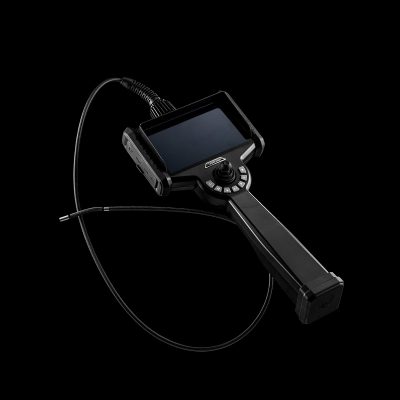
Endoscopes
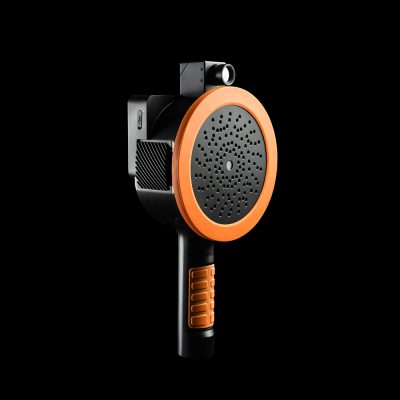
Acoustic cameras
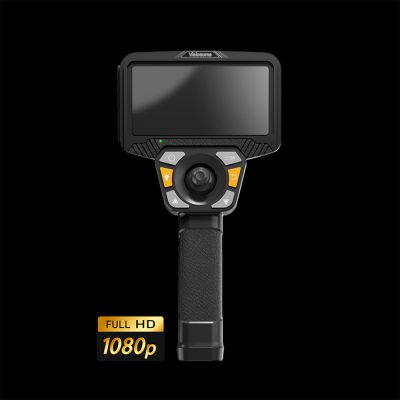
Endoscopes
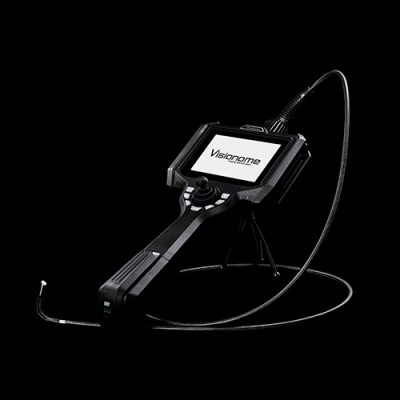
Endoscopes
Endoscopes
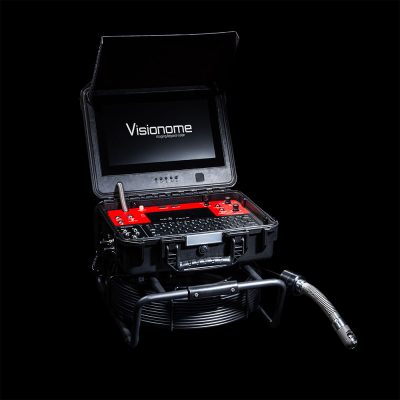
Pipe cameras